I may have mentioned before on this blog, but I have made a hobby of finding an an obscure "classic" book to read and then finding a performance adaption or video game based on it to watch or play.
It's a lot of fun but sometimes it's
lonely.

The latest literary work I've been
exploring is “The Woman In White” by Wilkie Collins. It's kind of
a drama/legal thriller. And there's a lot of delicious scandals and plot twists.
But the entire book spans over 600 pages (it was originally released as a serial novel) so I was very curious to see
what would be cut in the movie version.
I finally found the movie the other day, and after I finished watching it my opinion of it was actually really positive.
I thought,
I thought,
“Well that was actually really good as an adaption. Sure they had to cut several characters, re-assign roles, and abandon
plot twists, but it still seemed to make sense and it seems like they
attempted to address a lot of the themes the book explores."
Over the next two days...I've been thinking about it and it's starting to bother me.
Now I think it's probably not such an outstanding adaption.
I understand a lot of things needed to
be cut, that's not the problem. I think the way they re-assembled
all of those pieces made a story that doesn't quite make sense
logically.
Warning: *Spoilers for the 1859 book
and 1997 movie
Not-So-Bad:
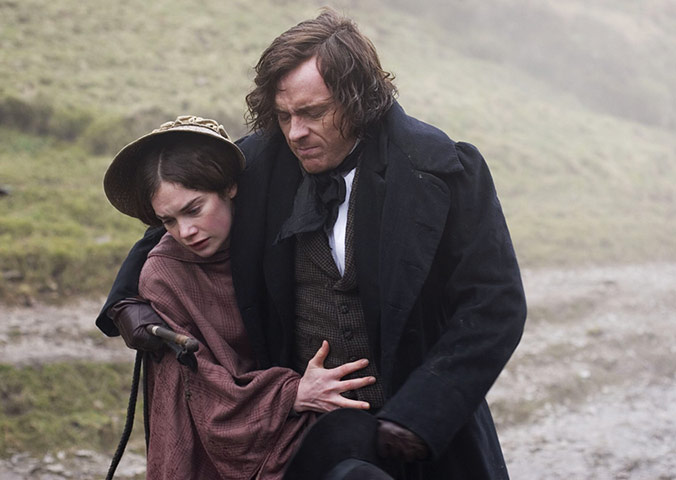
- Making Marian the protagonist
I thought this was a good choice,
especially since it's a stand-alone movie and not a series like the
book was. She's more of a central character to the story than Walter is, and she experiences a lot more of the action. It would be really hard to have
a male and female lead who have no romantic connection, so they went
for just the female lead. I approve.

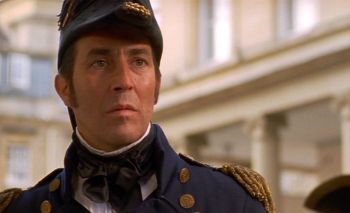
- Walter Hartwright is played by that guy from The Walking Dead.
- Laura and Walter's love story isn't played up as much.
This is excellent because it came
across, in the book, as really fatalistic. Laura and Walter are both
artists. Yes they do love each other, but they also get really dramatic. (And I think, a kind of hedonistic pleasure at the thought of a tragic love).
This is evidenced by the fact that they both do really drastic things after breaking up (Walter goes on an ill fated trip to South America and Laura tells her intended 1) she does not love him, 2) will never love him, 3) loves someone else (but won't say who), 4) oh but she's still willing to marry him, 5) but will totes not get with the guy she really likes, if he chooses not to marry her, 6) in fact, Laura says, she will never marry anyone except him.
This is evidenced by the fact that they both do really drastic things after breaking up (Walter goes on an ill fated trip to South America and Laura tells her intended 1) she does not love him, 2) will never love him, 3) loves someone else (but won't say who), 4) oh but she's still willing to marry him, 5) but will totes not get with the guy she really likes, if he chooses not to marry her, 6) in fact, Laura says, she will never marry anyone except him.
What an emo...
You know what? I call her bullcrap. You want him to be the one to break it off so you can feel justified, that you tried your hardest to keep the relationship together.
Well, it backfires epically for Laura. Somehow she seems surprised that her Percy (her intended) takes what seems to me the only respectable action with that kind of an ultimatum: he marries her anyway.
Well, it backfires epically for Laura. Somehow she seems surprised that her Percy (her intended) takes what seems to me the only respectable action with that kind of an ultimatum: he marries her anyway.
(What were you expecting, Laura? Really...)
In the movie, the romance is a lot more
understated.
Walter and Laura both kind of 'get it': “Hey, we like each other, but...well shucks...it's not going to work out. ”
Also, the reason for Walter being sent
away sets up the mystery a lot better and makes his re-introduction
to the narrative later in the story feel more authentic.
- Firstborn as a Baby boy (book) vs Baby Girl (movie)
The only reason they had a boy first in the book is so Uncle Farlie could DIE and leave the baby a bunch of monies. Which is stupid, because they've ALREADY made their way in life and they don't need more of his money. It degrades everything they've achieved in the book; the life they built was just waiting until they come into some money. BOOOOOOO
Also they could name the daughter "Anne", and that would be a really sweet tribute.
The Questionable-
- Marian and Laura as half-sisters through mom (book) vs half-sisters through dad (movie)
(Isn't it nice that not every Victorian era mom is a delicate little flower that will wilt and die at the birth of her firstborn??
The movie-makers apparently didn't think so.)
In the book, it kind of made sense that Mum-and-Dad Halcome-Farlie both had relationships before they got married: Marian was from Mum Halcome's first marriage and Dad Farlie had girlfriends before he settled down.
The movie-makers apparently didn't think so.)
In the book, it kind of made sense that Mum-and-Dad Halcome-Farlie both had relationships before they got married: Marian was from Mum Halcome's first marriage and Dad Farlie had girlfriends before he settled down.
It
also seemed like (to me) Mum-and-Dad Halcome-Farlie ended up
confiding in each other about their previous relationships etc. Which
is why they kind of took Anne in when she was a small child. Of
course we can't really know for sure because they're both dead at the
beginning of the story (but there is a letter they read from Mum Halcome-Farlie in which she seems to be figuring it out)
In the movie, they pretty much just
made Dad Farlie a womanizer, even after he got married. I'll admit it did bring home one of the
points of the story that would have other wise been neglected: that what seems like a minor indiscretion can
have an avalanche of detrimental effects if it's not dealt with. (Marian even gives a monologue to that effect) but it gets scrapped at
the very end: because the true cause of all their problems is: “bad man duz bad things.”
The over-simplification is dummm....
I respect that they were trying to make a point, but they weren't successful in making that point!
- Good vs Evil:
In the book, Marian, the hero, is set up
against Fosco, the primary villain (or rather the one who's the actual brains of the operation).
They're both smart, cunning and brave. And they would be well matched except for that Marian is a straight-shooter and Fosco is all underhanded and diabolical. It's kind of a Griffindor/Slytherin relationship.
They're both smart, cunning and brave. And they would be well matched except for that Marian is a straight-shooter and Fosco is all underhanded and diabolical. It's kind of a Griffindor/Slytherin relationship.
In the movie, Marian actually goes to
the dark side. So her failure to outsmart Fosco is because of her own
naivete and inexperience. They even set her up as a kind of protege
of Fosco's during their last interaction.

("Also, a high degree barely concealed lust...")
And as fun as it is to watch Marian get more and more desperately evil, her actions are never reconciled with her better nature. Marian blackmails one guy, and murders another; and justifies it because it's for her
sister. When she shows one ounce of regret, it's repressed by Walter who tells her "No one will find out".
Yeah, I bet that's what Mr Farlie, Lord Glyde, and Count Fosco figured, too.
Yeah, I bet that's what Mr Farlie, Lord Glyde, and Count Fosco figured, too.
In the book, the fact that the
villain's did things that were illegal; that they did things they needed to
conceal was a weak point. It made them vulnerable, and it made for a compelling detective story.
In the book, Marian and Walter are powerful BECAUSE they are not underhanded. They know there is a truth, and they know they've not done wrong. And once they uncover the truth they have the upper-hand (which is why they compile the whole "The Woman in White Manuscript" in the first place).
In the book, Marian and Walter are powerful BECAUSE they are not underhanded. They know there is a truth, and they know they've not done wrong. And once they uncover the truth they have the upper-hand (which is why they compile the whole "The Woman in White Manuscript" in the first place).
I think it gives the story a touch of the "dynamic good" that is needed in fiction. Truth is liberating, lies are a cage.
In the movie, Marian wins because she
is willing to be as ruthless as the bad guys. It's never reconciled with
her better nature. Instead of our heroes triumph resulting in an end
to a pattern of destructive behavior; it's implied the pattern continues to the
next generation.
Fosco makes it clear when he welcomes Marian to the dark side: when you go down this path,
there's no going back


So congrats, Marian you screwed up your niece's life!

(Nope)
- Prolonged Sexual Tension
Marian and Fosco's interactions are of the quality that make you forget that (appearance
wise) Marian is supposed to be the “Ugly Sister” and that Count Fosco is morbidly
obese, pretty old, already married and Eeeevvvvilll! And that it would never, ever, EVER work out (although you wish it would).
Intellectually, they're a match. And they share a mutual fascination and a degree of respect for each other.
(So, even though they would never (NEEEVVER) work out
as a couple...if they did have children, their parent's combined awesomeness made manifest in those children could save
the world (or perhaps destroy it...depending on what they chose the Light or the Dark Side) ;)
I thought their
relationship was absolutely delightful, I'd even go so far as to call
it a highlight of the book. So naturally the romantic subtext of
their relationship was scrapped in the movie.
(Sadness)
What makes it worse is that they picked
really good looking people to play the characters of Marian and
Fosco.
So, let's get this straight....
You made
Marian Good-Looking, you made Fosco good-looking....
(….and you didn't even let them kiss??)
BOOOOOOOOOOOOOOOO! A pox upon thee, movie
industry!
- Percival Glyde's Secret
OK I found this character really interesting in the book
Like, Percy genuinely becomes a worse person as time goes
on. However, as you learn more about him his character gets more sympathetic.
Once you learn his “Secret”, he becomes that prime
example of how small doings can have a profound impact on someone's life. He let circumstances he had no control over literally rule over him.
He is by no means guiltless, but the mistakes he makes at the start seem like reasonable ones. And then...things got out of control. He's more stupid than evil.
Of course, that's just in the book.
In the movie he's a freaking sadist!
So...what is Lord Glyde's Secret?
Well, in the movie, I'm not even freakin' sure...
Early on, Anne Catherick says that the revelation
of this secret would deprive Percival of his title and inheritance.
WHELL unless he inherited his wealth and title from from Mr Farlie
that really isn't the case.
Also, when asked what the secret is, Anne cryptically says:

Readers of the book will know that this
is because Anne does not actually know exactly what his secret is, she just knows he has one. If
an inquiry were to be made...the secret would be found and it would
'destroy him'.
In the movie, Anne does know exactly what
his "secret" is.
Its that she and him slept together when she was
younger.
(It's so stupid, Book!Walter Hartwright would be
thrilled)
The first problem with this is the actor they chose for
Glyde isn't that much older than Anne Catherick, so liberally
speaking if she was 12 years old when they were together, he can't
have been more than 15 or 16. Not exactly a child molester...
The second problem with this is the document that would ultimately
spell Lord Glyde's demise a teenage girl's journal.
WHUT?
SINCE WHEN DO JOURNAL ENTRYS CARRY THAT
KIND OF LEGAL WEIGHT? To destroy a man's reputation? Yeah, Maybe. To strip him of his title and wealth? I don't think so....
(Edit: after watching the movie again, I do have to give credit where credit is due. The letter was accompanied by a will from Sir Percival Sr, disinheriting his son. It was "hidden" in Dad Farlie's grave by Anne Cathrick for some reason. Maybe she was intending to blackmail him originally. It's not very well explained, I imagine they didn't want to focus on it too much. I think they should have.)
This next one is possibly the worst:
- The Old Swicheroo
(Warning, Caps lock in use...)\
In the book, THE WHOLE POINT OF THE
SWICHEROO IS SO THEY DIDN”T HAVE TO KILL ANYONE. They didn't get their
hand's dirty. One TERMINALLY ILL WOMAN is replaced by one HEALTHY
WOMAN and all her ravings that "I'm Sane!" only further condemn her as
insane in the eyes of the local mental health officials. Brilliant!
In the movie, there is really no point
to the swicheroo. They replace a healthy woman with a healthy woman, and push one of them off a tower.
So, if they were gonna kill someone, why not just kill the REAL Lady Glyde and put Anne back in the asylum WHERE NO ONE WAS GONNA BELIEVE HER ANYWAYS?!?!?!??!?!?
So, if they were gonna kill someone, why not just kill the REAL Lady Glyde and put Anne back in the asylum WHERE NO ONE WAS GONNA BELIEVE HER ANYWAYS?!?!?!??!?!?
It legit would not
have made any difference!
Biggest scandal in the story, and it
means nothing. BOOOOOOOOO!
These last two plot points are so
poorly contrived I'd rather think there's another explanation for what
happened:
Anne Catherick was indeed writing fanfiction, as Lord Glyde suggested. (because that's what 12 year old girls do). She
never had a literal relationship with Percival. Anne Catherick also
died of multiple health problems, and was not pushed off the edge of
a building. Marian was wrong on both of these accounts, therefore Marian's murder of Percival Glyde was completely unjustified. Marian discovers
this, and so do the authorities...and she has to deal with the consequences of her atrocious behavior
(preferably with the help of Count Fosco).
The message of the book is: Sometimes there isn't a scapegoat. Sometimes there's just problems and people who deal with them horribly.
The message of the movie is: There is no right or wrong, there are just people who get away with it and people who don't. And there totally is a scapegoat, if you look hard enough.
Conclusion:
Every-book-to-movie adaption is going to have it's discrepancies. I just think a few of these were handled very poorly. The movie-script probably could have benefited from more deviations from the book. Or, at least, better editing.
Favorite Quotes from the book:
"I am a citizen of the world, and I have met, in my time, with so many different sorts of virtue, that I am puzzled, in my old age, to say which is the right sort and which is the wrong. Here, in England, there is one virtue. And there, in China, there is another virtue. And John Englishman says my virtue is the genuine virtue. And John Chinaman says my virtue is the genuine virtue. And I say Yes to one, or No to the other, and am just as much bewildered about it"
"Are we, I wonder, quite such genuine boys and girls now as our seniors were in their time? Has the great advance in education taken rather too long a stride; and are we in these modern days, just the least trifle in the world too well brought up?"
"How can I describe her? How can I separate her from my own sensations, and from all that has happened in the later time? How can I see her again as she looked when my eyes first rested on her—as she should look now, to the eyes that are about to see her in these pages? "
"Human ingenuity, my friend, has hitherto only discovered two ways in which a man can manage a woman. One way is to knock her down [...]The other way is never to accept a provocation at a woman's hands. It holds with animals, it holds with children, and it holds with women, who are nothing but children growing up."
"I am a just man, even to my enemy—and I will acknowledge, beforehand, that they are cleverer brains than I thought them.”
“We don't want genius in this country unless it is accompanied by respectability.”
“The best men are not consistent in good—why should the worst men be consistent in evil?”
“Is the prison that Mr. Scoundrel lives in at the end of his career a more uncomfortable place than the workhouse that Mr. Honesty lives in at the end of his career?”






_Bennet_sisters_screenshot.jpg)