Friday, January 5, 2018

Year of Epic Fantasy Reading: Day 7 (The Princess and the Goblin)

Title: The Princess and the Goblin
Author: George MacDonald
Themes: Childhood
Quote: "That is the way fear serves us: it always sides with the things we are afraid of."
Reading/Listening Time: 5 hours, 36 minutes


Review:

I read that book is supposed to be one of the very first modern fantasy stories. If that's so, it's really surprising to me that one of the very first modern fantasy stories would have to do with what it means to be a princess. One of the main characters is literally a princess, but the story makes it clear that by 'princess' he isn't even particularly referring to female children: it's just kids in general and how precious they are.

It kinda starts out feeling like a regular fairy tale, and it ends kinda feeling like a fairy tale. But in the middle, there's definitely a lot that's atmospheric and nuanced that I really enjoyed. It has something of the quality of going into Narnia, even though the characters never really go into a distinctly magical realm.

The magic in this book is in nighttime,


and starlight,

 and caves,

and the wonder in experiencing something new and mysterious!

This is something I really appreciate on an aesthetic level...

The main characters are a 8 year old princess named Irene and a miner's son named Curdie.

Because the story is called "The Princess and the Goblin" I kept expecting a particular goblin protagonist or antagonist to show up, and sadly they didn't. (Curdie doesn't even turn out to be a goblin in disguise! BOO!) Actually there are several goblins, some of whom are revealed to be quite antagonistic, but I never felt like there was one particular goblin who was up against them.
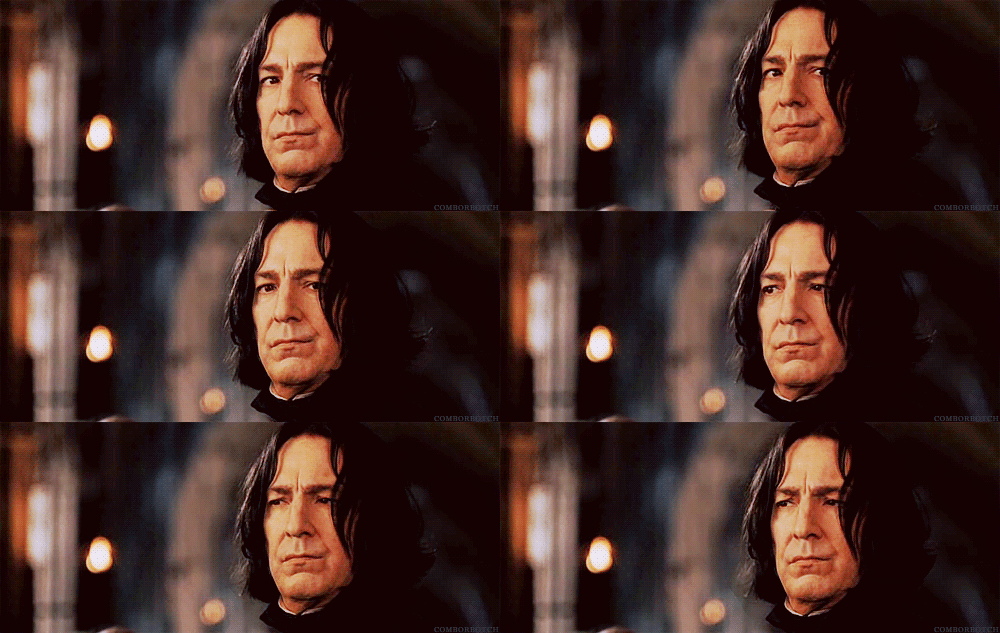

(I guess it should be called "The Princess and the Goblins" instead...)

The goblins are just another race of human being, and they've cut themselves off from the surface world because they felt like they were being treated like second class citizens in Irene's kingdom. I like that, while they are antagonistic, they are never made out to be monstrous. I think it would have been cool to have central character who represented this tho...


Anyway the little girl has a really sheltered upbringing until she meets a grandmotherly figure who encourages her to explore, and gives her a magical spidersilk-string that will lead her back to where she came from.

When we were first introduced to "the grandmother", I was totally freaked out:

UM NO! DO NOT DO WHAT THE CREEPY LADY TELLS YOU TO!!

But really the point in the story is that it's important for kids to be able to explore the world under the supervision and protection of a parental figure. In this case, she turns out to be Irene's actual grandmother who *SPOILER ALERT* has kind of been put away because she was married to a Goblin at one time, and

[END SPOILER]

might be trying to convince other people that you don't need to be afraid of people just because they're different from you.

The little boy is learning to be a miner. I think it's funny that, like, they single Curdie out as the prince archtype in this story. Little girls might want to be born a princess, but typically young boys want to feel like they've earned it, or at least that they've exhibited some heroic qualities. And Curdie certainly does: He has the confidence of his father, who allows him to spend the night in the dark caves, he keeps his cool when confronted by the kobolds and hears their plans. But ultimately, I think it's interesting, that he can be saved by Irene and her grandmother and it doesn't diminish his bravery in any way.

I mean, it's politically correct before politically correct even existed.

Kudos Mr MacDonald!

Rating: 4/5 Stars

Year of Epic Fantasy: Day 6 (A Spell for Chameleon)

Title: A Spell for Chameleon
Author: Piers Anthony
Themes: Puberty
Quote: "Sometimes what you have is better than what you thought you wanted."
Reading/Listening Time: 12 hours, 50 minutes

Review:

This story is about a kid from this magic place who got caught by his mother "Sowing his wild oats" (Which is I guess a magically term for masturbating), and kinda goes on a journey to understand what his sex drive is for. There's also a thing where he hasn't figured out what his magic talent is, and he has to find it or else he'll be exiled to our world.

The format of the book is really episodic, a lot of it is just him going from one magical landscape to the next and seeing how it works. It has kind of an "Alice and Wonderland" feeling to it. 

And then he meets Chameleon as a kind of re-occurring character in these episodes and she ends up being kind of significant because she is the sort of dynamic challenge the protagonist needs in his life. The problem is Chameleon is being presented from a really sexist perspective: she's either pretty and mentally retarded or ugly and a smart jerkface. It was really uncomfortable to read the bit when *SPOILER ALERT** He has sex with her in her pretty/mentally retarded phase. Like, that's kinda rapey...

[END SPOILER]

The book is definitely marketed for teenage boys, just with the style of humor and everything. And I guess the overall point is showing how a dynamic relationship can be healthy (Even the bad guys get less bad when they're in a dynamic relationship, and they work together to achieve goals without being total arses about it.) Is a good one, but, like, I definitely wouldn't want this to be my non-existent son's first exposure to these types of issues.

Rating: 3/5 (It's probably more like a 2/5 and I was feeling particularly generous that day.) 

Year of Epic Fantasy Reading: Day 5 (The Crystal Shard)

Title: The Crystal Shard
Author: Robert Anthony Salvadore
Themes: Community, prejudice
Quote:

"The halfling's father had once warned him that he would always be at a disadvantage when dealing with humans because they physically had to look down when speaking to him, as they would their own children."

Reading/Listening Time: 9 hours, 36 minutes


Review:

This story is about these people who live in a place called "Icewind Dale" and how they respond to external threats.

There's more than one main character, but to me the most prominent one is a guy named Wulfgar. He started out in Icewind Dale as kinda a prisoner of war: he was part of a raiding army and his raiding group lost the battle. Weirdly the Icewind Dalers didn't try to kill him, and he ended up being taken in by a dwarf blacksmith named Bruneor to become an indentured servant to him for a specific number of years and earn his freedom. Over time, the two develop an almost father-son bond and Wulfgar starts to fall in love with Bruneor's adopted daughter. And he kinda makes a place for himself in his new village, and the larger conglomerate of Ten-Towns.

As the start of the story Wulfgar is nearing the end of his indenture and Bruneor wants to help him learn what it means to be grown up; like, the proper way to go about making your way in the world etc. So he sends him on a camping trip with one of his ranger-buddies by the name of Drizzt Do'urden

Now, Drizzt looks kinda like this:


He's a dark-elf (Aka "Drow") and, just like Wulfgar, his race is not native to Icewind Dale. Not only does he stick out like a sore thumb, he also has to face a lot of prejudice because his native people are generally known to be really sociopathic and manipulative. Drizzt tells us himself that there is some truth to that, and that he believes his own tendencies to nonmaleficence and compassion to be the exception rather than the rule.

Wulfgar's training with Drizzt serves two purposes: it teaches him some sick survival and fighting techniques, but possibly more importantly it helps him to overcome his prejudice and keep an open mind.


One thing I thought was interesting was that they don't just blindly reject the notion of prejudice. Like, they explain that prejudice may have had (or once had) a basis in fact, and that the purpose of prejudice on a social level is to protect people. And protecting one's self and one's community is not a bad thing, the problem is maintaining that worldview even when evidence is shown to the contrary and it becomes invalid:

“The world is not static, and if the roots of our perceptions, traditions, hold static, then we are doomed, I say, into destructive dogma.” 

So the focus is more on asking, like, "OK Why does this prejudice exist? Is it valid? How is it affecting my behavior? Is there anything else we should take into consideration when passing judgement?"


Which I thought was actually kinda thoughtful! Kudos to Mr Salvadore!


After Wulfgar passes the initiation, his community is beset by this power-hungry wizard dude and his minions.

No, not those minions


but really, I kinda felt they could have been. This was the weak part of the story for me, mostly because of the wizard character being so obviously incompetent and vain by himself. Like, we know from the very beginning what a loser he is and how he just happened to have found this incredibly magical artifact that allows him to summon demons and take all this power. I think it would have been more interesting if he'd started out kinda mysterious, and then over time we learn his background along with Wulfgar and Co. I think the surprise of his origins would have been delightful to watch if it had been delivered in that way, as it is I couldn't really take him seriously (even though, like the first thing he does is have someone killed. He's just so incompetent, nothing he does makes him seem like a genuinely menacing threat for our protagonists

)


A lot of people who've read this book think that Drizzt kinda stole the show (ie even though he's not the main protagonist he's more interesting than them). I can kinda see where they're coming from, like, Drizzt is supposed to be "the outsider" wherever he goes he doesn't 'quite feel like he belongs He's an outcast to his homeland, because he's too nice. And he doesn't quite fit in the community of Ten-Towns because of prejudice against his race.


I think he might have resonated with me more if I'd have read the book when I was younger, what really stood out to me was the whole group dynamic of how these different people work together. "An Elf, a Dwarf, and a Human walk into a town council meeting." ;)

Rating: 4/5 Stars.

Wednesday, January 3, 2018

Year of Epic Fantasy Reading: Day 4 (The Way of Shadows)

Title: The Way of Shadows
Author: Brent Weeks
Themes: Nihilism vs faith
Quotes: "Life is empty, life is meaningless. When we take a life we take nothing of value."
Reading/Listening Time: 21 hours and 10 minutes


Review:

This book was, like, the most emo thing I read in the entire year of 2017. I stopped reading about half way because some of the dialogue was just too cheesy. It tackles some heavy issues but they're addressed in a kinda juvenile way so I had a hard time taking it seriously at first.

Luckily I came back to finish it because the second half was a lot better; it was less cheesy, and it was also really suspenseful! Everything comes together in a really satisfying way and it's neat to watch.

The story is mostly about this street urchin who apprentices himself to this master assassin dude to help him and his friends get a better life. His master is basically Edgelord Supreme and makes him repeat lovely little mantras, like the quote above, to make him not feel bad about doing bad things. (It doesn't work very well...)

The first half of the book is all about him growing up; training, setting up his alter-ego, and watching over his loved ones from afar. The second half is actually really involved, but a lot of it has to do with a mystery behind Edgelord Supreme, a theft of an extremely powerful magical artifact, and a big political coup. The secondary characters take on a life of their own at this point as well, which could have been really random but ended up being really awesome because all of their stories fit together perfectly, and you get a payoff to things you weren't anticipating.

The story kind of focuses on the criminal underbelly of society, particularly a syndicate that's run by a committee of crime-industry leaders (like the head of prostitution, assassination, banking etc.) It doesn't necessarily portray them as inherently bad people though. Mostly they're doing what's in their own self interests, just like the people in the government are doing. When we finally discover who some of them are, it's kind of like "Oh...I actually quite liked that person...s/he was nice to me."

But there's another group of people who are actually more compelling to me than the people in power on either side of the law, because their motivations are completely different and honestly they're a breath of fresh air compared to...Edgelord Supreme and Co...

 I'll call them the do-gooders (just because I don't have a better name for them) and my favorite's are Count Rimbold Drake and Dorian Ursuul:

I particularly loved it when we get Count Drake's backstory and you see he's a lot more than the goody-two-shoes they've built him up to be. He actually says some really profound things; and he represents a perspective that was really needed in this book.

I loved Dorian's antics too. He's a lot more active of a character in the plot than Count Drake (Count Drake is more in the background) but Dorian is kind of one of the more powerful magical characters in the book and he's focused on using his magic for good. (Most people who can use magic can really only use it in, like, one specific way but Dorian can do, like 3: Fire magic, healing magic, and also he's sort of a prophet or soothsayer. The sad thing his, he knows that using his prophetic gifts will give him insanity as he grows older but HE KEEPS DOING IT ANYWAY because he believes it's important. Something he's seen in his vision's convinced him that he needs to take active part in shaping the future.

I think it's weird they don't mention it a whole lot, but by his last name we know he's the son of a king. And that the king dude makes it a point to have as many kids as possible and the most powerful/brutal one will get the throne. Dorian's just not about that life.

He's also really funny, and this story really needed that too.)

One character I didn't like much was Doll Girl. You get the feeling she's supposed to be this perfect little cinnamon roll, but every time Azoth starts talking about how tragic and perfect she is I want to tell him to shut up.

Also she can go from "I am eternally in your debt, how can I every repay you?!" to "Don't you ever talk to me or my cat again" outrageously fast.


Rating; 3/5 stars.

Tuesday, January 2, 2018

Year of Epic Fantasy: Day 3 (The Sword of Welleran)

Title: The Sword of Welleran
Author: Edward John Moreton Drax Plunkett, 18th Baron of Dunsany (AKA. Lord Dunsany)
Themes: Heritage, Legends vs legacies
Quote: Thus wept the people of Merimna in the hour of their great victory, for men have strange moods.' 

Reading/Listening Time: 34 minutes, 17 seconds


Review:

This story was written in in, like, 1908, so it's kind of got the really poetic/borderline archaic word use going on...

However I was really surprised to find that, even with that particular style of writing, the author ends up telling a pretty modern-style of tale:

It's about this relatively metropolitan-type city where the people are decended from these great warriors and heroes. The people of this city/state are really proud of their heritage and, to them, it's almost like their ancestors are still alive.

They have this big-old complex of memorial buildings that's full of graves, and artifacts, and weapons, and statues of their legendary ancestors. And these cosmopolitan people still see themselves as the ancient warrior race that could hold their own against it's enemies even though they haven't actually fought a war or done anything remotely heroic in a very, very, very long time.

Their cultural attachment to their ancestors is shown to be kinda delusional; they somehow think that their old heroes are still alive just chillin' in their gravestones or something...

This delusion particularly comes to a head when the country is threatened by a real war and everyone basically chickens out: it turns out that they are actually so cowardly that no one even has the courage to go to the memorial place and ask their ancestors for help.


What. The. Heck?


Fortunately, the spirits of their ancestors are still watching over them because otherwise they would be screwed:

"Then said Welleran [He's one of the legendary warrior dudes] to his comrades: Our hands can hold swords no more, our voices cannot be heard, we are stalwart men no longer. We are but dreams, let us go among dreams. Go all of you, and thou too, young Iraine, and trouble the dreams of all the men that sleep, and urge them to take the swords of their grandsires that hang upon the walls, and to gather at the mouth of the ravine; and I will find a leader and make him take my sword."


There's a whole dream encounter between the spirit of Welleran and a guy named Rold where Welleran does things to try and convince, and eventually ends up pleading with, Rold to take up Welleran's old Sword.

It's so funny to me, because Rold's initial response is like "BUT THAT'S ILLEGAL!!"

(^ TOTALLY the perspective of a modern person! And TOTALLY something I would probably say in his place!)


Then Welleran really starts hammering it in: If he were a live, this is something he would do. But he's not alive, he's dead and DEAD MEN CAN'T SAVE THE LIVING...

So Rold ends up taking the sword and defeats the enemy with it, but the response isn't at all "Yay we won!" Rold is still a modern man, and his response should really speak to the modern perspective on warfare: He did what he had to do, but he's disgusted by it...

 "O sword, sword! How horrible thou art! Thou art a terrible thing to have come among men. How many eyes shall look upon gardens no more because of thee? How many fields must go empty that might have been fair with cottages, white cottages with children all about them? How many valleys must go desolate that might have nursed warm hamlets, because thou hast slain long since the men that might have built them? I hear the wind crying against thee, thou sword! It comes from the empty valleys. It comes over the bare fields. There are children"s voices in it. They were never born. Death brings an end to crying for those that had life once, but these must cry for ever. O sword! sword! why did the gods send thee among men?" And the tears of Rold fell down upon the proud sword but could not wash it clean.

The rest of the population is also grieving; not with the loss of life but because they've lost a huge part of their cultural identity and their personal connection to the past:


"Not any more, not any more for ever will Welleran now return...For his sword is in the hand of another. Now we know indeed that he is dead. O Welleran, thou wast our sun and moon and all our stars. Now is the sun fallen down and the moon broken, and all the stars are scattered as the diamonds of a necklace that is snapped off one who is slain by violence." 


Basically the whole facade of their worldview: their identity, that they've inherited this legacy of their mighty warrior ancestors just crumbles apart around them. 


This story makes me think a lot about heritage: Obviously the way we live today can be really different from the way people lived in the past, and generally our reactions to their worldview is to identify with them, romanticize them, or to despise them. 

Occasionally though, we can learn from them, and respect the perspective they bring into our lives the same way we can admire the leadership abilities, tenacity, perseverance and courage of people like Gengis Khan, Ragnar Lothbrok, Shaka, or Alfred the Great without sanctioning the heinous or shady things they did.

Monday, January 1, 2018

Year of Epic Fantasy Reading: Day 2 (The Tales of Dunk and Egg)

Title: A Knight of the Seven Kingdoms (AKA, The Tales of Dunk and Egg) books 1-3: The Hedge Knight, The Sworn Sword, and The Mystery Knight
Author: George R. R Martin
Themes: Chivalry, living up to your values
Quote:

Each time a battle is lost or a crop fails, the fools will say, 'Baelor would not have let it happen, but the hedge knight killed him.'” 

Dunk could see the truth in that. “If I had not fought, you would have had my hand off. And my foot. Sometimes I sit under that tree there and look at my feet and ask if I couldn't have spared one. How could my foot be worth a prince's life? And the other two as well, the Humfreys, they were good men too." Ser Humfrey Hardyng had succumbed to his wounds only last night. 

“And what answer does your tree give you?” 

“None that I can hear. But the old man, Ser Arlan, every day at evenfall he'd say, 'I wonder what the morrow will bring.'  He never knew, no more than we do. Well, mighten it be that some morrow will come when I'll have need of that foot? When the realm will need that foot, even more than a prince's life?" 

Reading/Listening Time: 10 hours and 50 minutes for the trilogy


Review:

A few years ago I attempted to read the first book in the "A Song of Ice and Fire" series, I found the language to be a bit crude for my tastes ("If I have to read the word "tit" used inappropriately ONE. MORE. TIME!!!!")

Even though I didn't finish the book, I was really interested in the world it takes place in and a lot of the ideas Mr Martin seems to be trying to convey. When I found out that the author wrote another series that takes place in the same fantasy world (and that they were short stories) I knew I definitely wanted to try them out.

I felt like I got a lot more out of this series than I probably would from ASOIAF because it's mostly focused on one character, and he basically typifies the themes in ASOIAF that I found particularly compelling.

It's about this guy named Duncan who's a knight, but because he's not sworn to a Lord he kinda just works freelance. Because he doesn't really have a boss you'd think this means he doesn't really get held accountable for the kind of behavior he exhibits on the job, but actually he's basically internalized the standards of knightly conduct. It isn't until he starts hanging out with normal knights (ones who are sworn to a lord) that he realizes that other people don't take all that morality stuff very seriously. In each story, his internal sense of what's right and what's wrong is challenged in some way. Like he'll take a job, thinking that it's somewhat straightforward, but the situation ends up being way more complex than he initially thought.

This is actually a really cool conflict! And the really neat thing about it is that he really tests himself in this; he doesn't relinquish his mores the moment they become inconvenient to him, he actually thinks about it before he does something. And often times he finds the correct route is, in fact, the most difficult one: the one that requires self-sacrifice, courage, or selflessness...all the things he's been raised up to believe are important ACTUALLY ARE IMPORTANT.

Another interesting aspect of this story is the Targaryens. These stories take place about 100 years before Mr Martin's SOIAF novels so there are still a lot of them around and, to me, they are a lot of fun to be around. And the way he gets kind of informally taken in by them (or rather, he takes them in) is quite interesting!


Rating: 4/5 stars on the first two, 3/5 stars on the last because they were setting it up as some sort of a turning point for Egg's character and I didn't feel like it really was.


Year of Epic Fantasy Reading: Day 1 (A Wizard of Earthsea)

Title: A Wizard of Earthsea
Author: 
Themes: Power, duty, consequences
Quote: “To light a candle is to cast a shadow...”

Reading/Listening Time: Around 6 hours


Review:


I felt kind of like this story was a gentile deconstruction of fantasy tropes. Like a lot of fantasy stories primarily concern the coming-of-age of a character, but I feel like Ms Le Guin has a lot to say about how personal growth actually happens in real life. In a lot of fantasy stories the focus is on a conflict, most of the time stemming from an external force that's getting in the way of the main character getting what she or he wants. This story, though, is all about consequences.

One of the most poignant parts of the book for me is when the main character gets shipwrecked on this island (this whole magical land is a series of island nations, but this particular island is really small, most of it is underwater a lot of the time, and it's super isolated) where he meets this raggedy-looking elderly couple who don't speak his language. Initially they're distrustful of him, but ultimately the wizard and the elderly couple try to help each other. Afterward the elderly woman shows our MC a beautiful, old fancy dress that was made for a small girl. And he finally understands that these people were once royalty (like a prince and a princess) and because of war they were marooned on this island as small children and they've lived out their whole lives in almost complete isolation.

Similarly, we never see what specifically The Wizard did to create *SPOILER ALERT* his shadow-self. *END SPOILER*

We get the impression that he doesn't really know either; it's just kind of the manifestation of all the horrible things he would grow up to do someday, and it's come back to haunt him in the present by going around doing awful things to people.

I feel like this character could have really easily been just written as a villain and I really respect that that never happens, and that we are asked to identify with this type of person: a generally decent-hearted individual, but also someone who's so focused on his own goals in life that he doesn't always think about the potential consequences of his actions. And we come to respect him, not because he's talented, or smart (like Ravenclaw-type personality), or even because we see him become truly wise...but rather it's because when he sees that he's done something wrong he'll got at such great lengths to set it right.


Notes:

I listened to this story on audiobook narrated by a guy named Harlan Ellison, I felt like his narration style was really expressive and it kept me interested in what was happening. The story does have a bit of action, but most of it is concerned with the main characters internal journey and transition, I think it might have been hard for me to get into unless I understood that whole mindset going into it. But Mr Ellison's voice just takes you there.

Rating: 4/5 stars. Would totally read again, especially if Ellison was narrating.